Español Nivel A2 · La misión (Página 1)Spanish Level A2 · The mission (Page 1)
Nivel A2 · Hoja de prácticaLevel A2 · Practice worksheet
Nos escribimos todos los días: verbos recíprocosReciprocal verbs in Spanish: how to say "each other"
MISIÓN «¿CUÁNTO SE CONOCEN?» · NOS · OS · SETHE "HOW WELL DO THEY KNOW EACH OTHER?" MISSION · NOS · OS · SE
Arregla la ficha de Rosa y Tomás para el concurso y escribe la tuya.Fix Rosa and Tomás's application for the game show and write your own.
Temas:Topics:nos llamamos, se venel uno al otroa los dos les gusta
Nombre del estudiante:Student Name:
Fecha:Date:
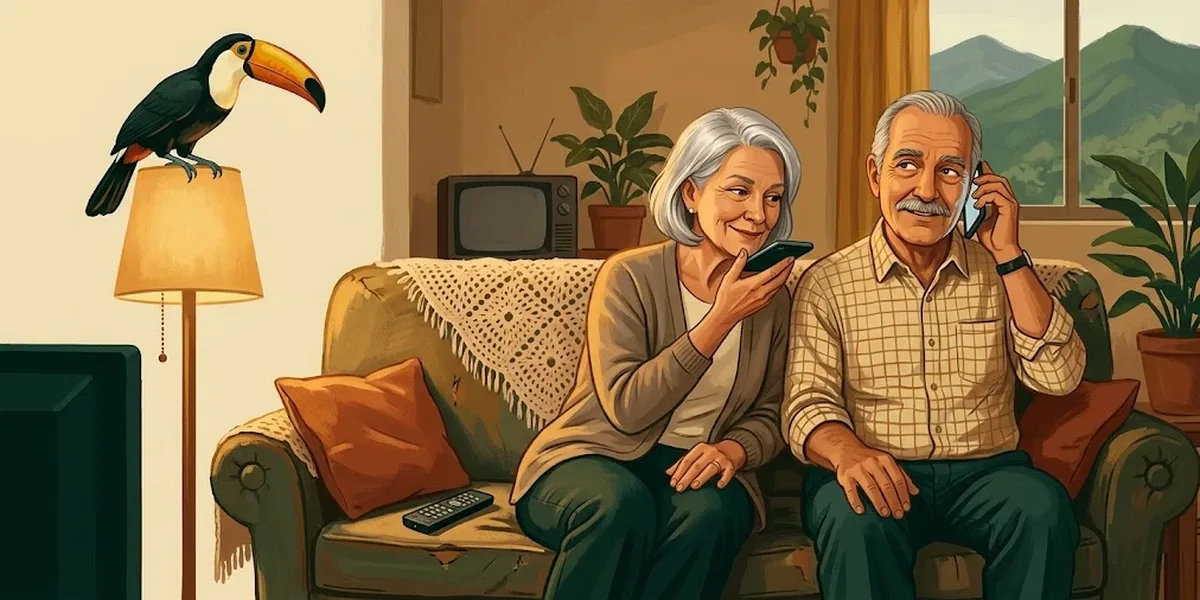
Rosa y Tomás están casados desde 1981. Quieren ir al concurso de televisión «¿Cuánto se conocen?». En la ficha dicen que se entienden sin hablar. La verdad: se mandan audios desde el mismo sofá. Su ficha de inscripción tiene errores.Rosa and Tomás have been married since 1981. They want to go on the TV game show "How well do they know each other?". On the form they say they understand each other without talking. The truth: they send each other voice messages from the same sofa. Their application form has mistakes.
Tu misión: arreglar la ficha de Rosa y Tomás, parte por parte, y al final escribir tu ficha con una persona de tu vida.Your mission: fix Rosa and Tomás's form, part by part, and at the end write your own form with a person from your life.
Parte 1Part 1El videoThe video actividad 1activity 1
Parte 2Part 2Lo que hacen juntosWhat they do together actividad 2activity 2
Parte 3Part 3La ficha sin erroresThe form without mistakes actividad 3activity 3
Parte 4Part 4Los gustosLikes and dislikes actividad 4activity 4
FinalFinalTu fichaYour form actividades 5 y 6activities 5 and 6
Vocabulario claveKey vocabulary
el concurso· game show
la ficha de inscripción· application form
casados· married
desde· since
conocerse· to know each other
llevarse bien / mal· to get along / not to get along
pelearse· to fight, to argue
abrazarse· to hug each other
contarse· to tell each other
mandarse· to send each other
el audio· voice message
el control de la tele· TV remote
roncar· to snore
madrugar· to get up early
la prueba· test, challenge
el uno al otro· each other
1¿Qué es un verbo recíproco?What is a reciprocal verb?
Dos personas (o más) hacen la misma acción, la una a la otra. En español lo dice un pronombre: nos, os o se.Two people (or more) do the same actionto each other. In Spanish a pronoun says it: nos, os or se.
Rosa llama a Tomás. Tomás llama a Rosa.
⇄
Rosa y Tomás se llaman.
Nos escribimos todos los días. (We write to each other every day.)
Rosa y Tomás se abrazan en la puerta. (Rosa and Tomás hug each other at the door.)
¿Ustedes se ayudan? (Do you help each other?)
EN → ESWe call each other every day. → Nos llamamos todos los días. (en español no hay una palabra para each other: lo dice nos)(Spanish has no separate word for each other: nos says it)
Nos escribimos todos los días: verbos recíprocos
Español Nivel A2 · Las claves (Página 2)Spanish Level A2 · The key ideas (Page 2)
2La forma: solo en pluralThe form: plural only
Para hacer algo «el uno al otro» necesitas dos personas o más. Por eso el recíproco solo existe con nos, os y se (plural). Son los mismos pronombres del reflexivo.To do something "to each other" you need two people or more. That's why the reciprocal only exists with nos, os and se (plural). They are the same pronouns as reflexive verbs.
PersonaPerson
Reflexivo (espejo)Reflexive (mirror)
Recíproco (each other)Reciprocal (each other)
yo
me miro
✗ (una persona)(one person)
tú
te miras
✗
él / ella / usted
se mira
✗
nosotros/as
nos miramos
nos llamamos
vosotros/as (España)
os miráis
os llamáis
ellos / ellas / ustedes
se miran
se llaman
✗ Yo me llamo con Tomás. → ✓ Tomás y yo nos llamamos. · En Latinoamérica: ustedes → se (¿Ustedes se llaman?).In Latin America: ustedes → se (¿Ustedes se llaman? Do you call each other?).
3La fórmulaThe formula
① dos personas o mástwo people or moreRosa y Tomás · Mi hermano y yo② nos / os / se③ verbo en pluralverb in the pluralllaman · escribimos
✗ Nos llamo.
✓ Nos llamamos.
El verbo va en plural.The verb goes in the plural.
✗ Llamamos cada otro.
✓ Nos llamamos.
Cada otro no existe: el pronombre ya dice each other.Cada otro doesn't exist: the pronoun already says each other.
✗ Rosa y Tomás se llama.
✓ Rosa y Tomás se llaman.
Dos personas = ellos.Two people = ellos (they).
✗ Mi hermano y yo se escriben.
✓ Mi hermano y yo nos escribimos.
Si estás tú (yo) = nosotros → nos.If you are in it (yo) = nosotros → nos.
EN → ESThey see each other on Saturdays. → Se ven los sábados. · We get along. → Nos llevamos bien.
4Espejo, each other o verbo normalMirror, each other or normal verb
EspejoMirrorLa acción vuelve a la misma persona.The action comes back to the same person. Rosa se mira en el espejo. (herself)
⇄ Each otherDos personas, la una a la otra.Two people, to each other. Rosa y Tomás se miran. (each other)
→ NormalNormalLa acción va a otra cosa: sin pronombre.The action goes to something else: no pronoun. Rosa mira la tele.
La trampa:Se miran puede ser «se miran en el espejo» o «each other». Si hay duda, añade el uno al otro (dos hombres o un hombre y una mujer), la una a la otra (dos mujeres) o los unos a los otros (un grupo): Rosa y Tomás se miran el uno al otro.The trap:Se miran can mean "they look at themselves" or "they look at each other". If it's unclear, add el uno al otro (two men, or a man and a woman), la una a la otra (two women) or los unos a los otros (a group): Rosa y Tomás se miran el uno al otro.
Ojo:Me llamo Rosa = mi nombre es Rosa (espejo). Nos llamamos todos los días = we call each other.Careful:Me llamo Rosa = my name is Rosa (mirror). Nos llamamos todos los días = we call each other every day.
Nos escribimos todos los días: verbos recíprocos
Español Nivel A2 · El video y el crucigrama (Página 3)Spanish Level A2 · The video and the crossword (Page 3)
1La producción revisa el videoThe producers check the video
El concurso pide un video de la pareja. Marca cada frase: espejo, ⇄ each other o → normal. Solo las frases ⇄ pasan a la ficha (Parte 1).The game show asks for a video of the couple. Mark each sentence: mirror, ⇄ each other or → normal. Only the ⇄ sentences go on the form (Part 1).
1. Tomás se afeita con la radio puesta. Tomás shaves with the radio on.
2. Rosa y Tomás se mandan audios desde el sofá. Rosa and Tomás send voice messages from the sofa.
3. Rosa manda un audio a su hermana. Rosa sends a voice message to her sister.
4. Rosa se pinta los labios antes del video. Rosa puts on lipstick before the video.
5. Rosa y Tomás se pelean por el control de la tele. Rosa and Tomás fight over the TV remote.
6. Tomás ronca en el sofá. Tomás snores on the sofa.
7. Al final de la película, se abrazan. At the end of the movie, they hug.
8. Tomás se mira en el espejo y se peina. Tomás looks in the mirror and combs his hair.
9. Tomás mira a Rosa y sonríe. Tomás looks at Rosa and smiles.
con la radio puesta · with the radio on | pintarse los labios · to put on lipstick | la película · movie | peinarse · to comb one's hair | sonreír · to smile
Parte 1 de la ficha: ¿cuántas frases pasan a la ficha? ¿Cuáles?Part 1 of the form: how many sentences go on the form? Which ones?
2El crucigrama de la parejaThe couple's crossword
Cada pista tiene dos frases. Júntalas en una sola con un recíproco y escribe solo el verbo en el crucigrama (sin nos ni se). Es la Parte 2 de la ficha: lo que hacen juntos.Each clue has two sentences. Join them into one with a reciprocal verb and write only the verb in the crossword (without nos or se). This is Part 2 of the form: what they do together.
1
2
3
4
5
6
7
➡ HorizontalesAcross
2. Rosa llama a Tomás desde la cocina. Tomás llama a Rosa desde el sofá. → Se ___. Rosa calls Tomás from the kitchen. Tomás calls Rosa from the sofa.
6. Yo le escribo a mi abuela. Mi abuela me escribe. → Mi abuela y yo nos ___. I write to my grandmother. My grandmother writes to me.
7. Rosa pelea con Tomás. Tomás pelea con Rosa. → Se ___ por el control de la tele. Rosa fights with Tomás. Tomás fights with Rosa. (over the TV remote)
⬇ VerticalesDown
1. Rosa conoce a Tomás. Tomás conoce a Rosa. → Se ___ desde 1981. Rosa knows Tomás. Tomás knows Rosa. (since 1981)
3. Mi hermano me ayuda con la mudanza. Yo ayudo a mi hermano con el celular. → Mi hermano y yo nos ___. My brother helps me with the move. I help my brother with his phone.
4. Yo te veo los sábados. Tú me ves los sábados. → Tú y yo nos ___ los sábados. I see you on Saturdays. You see me on Saturdays.
5. Rosa abraza a Tomás. Tomás abraza a Rosa. → Se ___. Rosa hugs Tomás. Tomás hugs Rosa.
Mira quién hace la acción: Rosa y Tomás = ellos → se + verbo en -an / -en. Mi abuela y yo = nosotros → nos + verbo en -amos / -emos / -imos. Look at who does the action: Rosa y Tomás = they → se + verb in -an / -en. Mi abuela y yo = we → nos + verb in -amos / -emos / -imos.
Nos escribimos todos los días: verbos recíprocos
Español Nivel A2 · La ficha y los gustos (Página 4)Spanish Level A2 · The form and their likes (Page 4)
3La ficha tiene 6 erroresThe form has 6 mistakes
Este es el borrador de la ficha de Rosa y Tomás. Hay 7 frases y 6 errores: una frase está bien. Escribe la frase correcta, o ✓ si está bien. Es la Parte 3.This is the draft of Rosa and Tomás's form. There are 7 sentences and 6 mistakes: one sentence is correct. Write the correct sentence, or ✓ if it is correct. This is Part 3.
BorradorDraft
Frase correctaCorrect sentence
1. Rosa y Tomás nos conocemos desde 1981. Meaning: Rosa and Tomás have known each other since 1981.
2. Están casados y se llevan muy bien. Meaning: They are married and they get along very well.
3. Todas las noches se manda audios desde el mismo sofá. Meaning: Every night they send each other voice messages from the same sofa.
4. Tomás se ronca por la noche. Meaning: Tomás snores at night.
5. Por la mañana, llaman cada otro desde la cocina. Meaning: In the morning, they call each other from the kitchen.
6. A veces se pelea por el control de la tele. Meaning: Sometimes they fight over the TV remote.
7. «Rosa y yo se entendemos sin hablar», dice Tomás. Meaning: "Rosa and I understand each other without talking," says Tomás.
el borrador · draft | entenderse · to understand each other | sin hablar · without talking
4Lo que les gusta a los dosWhat they both like
Repaso de A1.2: gustar.A Rosa le gusta el tango (una cosa o un verbo) · A Tomás le gustan los gatos (varias cosas) · A los dos les gusta el café (= a Rosa y a Tomás) · A los dos nos gusta… (= a ti y a mí).A1.2 review: gustar.A Rosa le gusta el tango (one thing or a verb) · A Tomás le gustan los gatos (several things) · A los dos les gusta el café (both of them = Rosa and Tomás) · A los dos nos gusta… (both of us).
Mira la tabla y escribe una frase para cada fila. Usa A los dos les gusta(n)… o A ___ le gusta(n)…, pero a ___ no. Es la Parte 4.Look at the table and write one sentence for each row. Use A los dos les gusta(n)… (They both like…) or A ___ le gusta(n)…, pero a ___ no. (___ likes…, but ___ doesn't.) This is Part 4.
Rosa
Tomás
Tu fraseYour sentence
a) los gatos (cats)
b) el tango
c) madrugar
d) las películas de terror (horror movies)
e) el café sin azúcar (coffee without sugar)
Termina la frase de la ficha: Por las noches, Rosa y Tomás se pelean por el control de la tele porque…Finish the sentence on the form: At night, Rosa and Tomás fight over the TV remote because…
Nos escribimos todos los días: verbos recíprocos
Español Nivel A2 · Tu ficha (Página 5)Spanish Level A2 · Your form (Page 5)
5Dos verdades y una mentiraTwo truths and a lie
Piensa en una persona de tu vida (amigo, amiga, pareja, hermano, compañero de trabajo…). Escribe 3 frases con recíprocos sobre ustedes dos: 2 verdaderas y 1 inventada. En clase, tu profe adivina la mentira y te hace una pregunta sobre cada frase. Si trabajas solo, marca la mentira y escribe la verdad.Think of a person in your life (friend, partner, brother or sister, coworker…). Write 3 sentences with reciprocal verbs about the two of you: 2 true and 1 made up. In class, your teacher guesses the lie and asks you a question about each sentence. If you work alone, mark the lie and write the truth.
Modelo (Lucía):Mi hermana y yo nos llamamos todos los domingos. · Nos peleamos por la comida. · Nos escribimos cartas.Model (Lucía):Mi hermana y yo nos llamamos todos los domingos. · Nos peleamos por la comida. · Nos escribimos cartas. (My sister and I call each other every Sunday. · We fight over food. · We write each other letters.)
1.
2.
3.
La verdad es que…The truth is that…
6Tu ficha para «¿Cuánto se conocen?»Your form for "How well do they know each other?"
La ficha de Rosa y Tomás, ya sin errores (modelo)Rosa and Tomás's form, now without mistakes (model)
Nos conocemos desde 1981.
Nos vemos todo el día: estamos jubilados.
Nos mandamos audios desde el sofá.
Nos ayudamos: Rosa con el celular de Tomás y Tomás con la cocina.
Nos llevamos bien porque nos reímos mucho.
A veces nos peleamos cuando hay una película de terror.
A los dos nos gusta el café sin azúcar.
Nuestra prueba: Tomás ronca, Rosa lo mira… y él se despierta.
We've known each other since 1981. · We see each other all day: we're retired. · We send each other voice messages from the sofa. · We help each other: Rosa with Tomás's phone and Tomás with the cooking. · We get along because we laugh a lot. · Sometimes we fight when there's a horror movie. · We both like coffee without sugar. · Our test: Tomás snores, Rosa looks at him… and he wakes up.
jubilados · retired | reírse · to laugh | despertarse · to wake up
Ahora escribe tu ficha con una persona real. Usa el modelo de arriba: Nos conocemos desde ___ · Nos vemos / nos escribimos / nos llamamos ___ · Nos ayudamos con ___ · Nos llevamos bien porque ___ · A veces nos peleamos cuando ___ · A los dos nos gusta ___ · Nuestra prueba: nos entendemos sin hablar cuando ___.Now write your form with a real person. Use the model above: Nos conocemos desde ___ (We've known each other since) · Nos vemos / nos escribimos / nos llamamos ___ (We see / write to / call each other) · Nos ayudamos con ___ (We help each other with) · Nos llevamos bien porque ___ (We get along because) · A veces nos peleamos cuando ___ (Sometimes we fight when) · A los dos nos gusta ___ (We both like) · Nuestra prueba: nos entendemos sin hablar cuando ___ (Our test: we understand each other without talking when).
Antes de terminar, revisa:Before you finish, check:
Usas 5 verbos recíprocos distintos o más.You use 5 different reciprocal verbs or more.
Tú estás en la frase: nos + verbo en -amos / -emos / -imos.You are in the sentence: nos + verb in -amos / -emos / -imos.
Hay una frase con gustar: A los dos nos gusta…There is a sentence with gustar: A los dos nos gusta…
Explicas una cosa con porque y un ejemplo.You explain one thing with porque and an example.
Mi ficha de inscripciónMy application form6 a 8 frases6 to 8 sentences
En clase: lee tu ficha en voz alta. Tu profe elige 3 preguntas del banco de abajo y tú respondes con recíprocos.In class: read your form out loud. Your teacher chooses 3 questions from the bank below and you answer with reciprocal verbs.
Banco de preguntas extra (si la clase lo pide)Extra question bank (if the class wants more)
¿Con quién te llevas muy bien? ¿Por qué?Who do you get along with very well? Why?
¿Con quién te escribes más por WhatsApp?Who do you text the most on WhatsApp?
¿Tu familia y tú se ven mucho?Do you and your family see each other a lot?
¿Con quién te peleas a veces? ¿Por qué cosas?Who do you sometimes argue with? About what?
¿Tus vecinos y tú se saludan?Do you and your neighbors say hello to each other?
En tu país, ¿la gente se besa o se da la mano para saludar?In your country, do people kiss or shake hands to say hello?
¿Conoces a una pareja que se entiende sin hablar?Do you know a couple who understand each other without talking?
¿Tu mejor amigo y tú se cuentan todo?Do you and your best friend tell each other everything?
Respuestas y autocorrección (haz clic para revisar)Answer Key & Self-Check (Click to expand)
1. Rosa y Tomás se conocen desde 1981. · 2. ✓ · 3. Todas las noches se mandan audios desde el mismo sofá. · 4. Tomás ronca por la noche. (sin se: es un verbo normalno se: it's a normal verb) · 5. Por la mañana, se llaman desde la cocina. (tambiénalso: se llaman el uno al otro) · 6. A veces se pelean por el control de la tele. · 7. «Rosa y yo nos entendemos sin hablar», dice Tomás.
4. Lo que les gusta a los dos
a) A los dos les gustan los gatos. · b) A Rosa le gusta el tango, pero a Tomás no. · c) A Tomás le gusta madrugar, pero a Rosa no. · d) A Rosa le gustan las películas de terror, pero a Tomás no. · e) A los dos les gusta el café sin azúcar. · Ficha:Form: …porque a Rosa le gustan las películas de terror y a Tomás no.
5. Dos verdades y una mentira(respuesta personal; modelo)(personal answer; model)
Mi mejor amigo y yo nos vemos los viernes. · Nos ayudamos con el trabajo. · Nos escribimos en inglés. → Mentira: la 3. La verdad es que nos escribimos en español.Lie: number 3. The truth is that we write to each other in Spanish.
6. Tu ficha(modelo)(model)
Mi amiga Laura y yo nos conocemos desde 2015. Nos vemos una vez al mes y nos escribimos casi todos los días. Nos ayudamos con el trabajo: ella me corrige el inglés y yo le explico el español. Nos llevamos bien porque las dos somos muy curiosas: siempre nos contamos todo. A veces nos peleamos cuando ella llega tarde. A las dos nos gustan los viajes y el café sin azúcar. Nuestra prueba: nos entendemos sin hablar en las reuniones aburridas.
¿Quieres practicar este tema hablando en vivo?Ready to practice this topic in real conversation?
Reserva una clase personalizada con Camilo en Tucaneo Academy.Book a private one-on-one session with Camilo at Tucaneo Academy.
aprendecontucaneo@gmail.com
tucaneo.com
Guarda tu progreso
Tus respuestas no se guardan en el servidor.
Para no perder tu trabajo, presiona "Guardar como PDF" abajo (o Ctrl/Cmd + P).
Elige "Guardar como PDF" como destino.
Envía el PDF a tu profesor: aprendecontucaneo@gmail.com
Imagen ampliada · Haz clic afuera o presiona ESC para cerrarExpanded image · Click outside or press ESC to close
Sigue practicando los verbos recíprocosKeep practicing reciprocal verbs
Tres materiales del mismo módulo, gratis y sin registrarte.Three more materials from this module — free, no sign-up.
Finished this worksheet? Let’s practice speaking it out loud!
Hi, I’m Camilo — I made this worksheet. In a free 20-minute call I’ll check your level and show you exactly how to start speaking. No pressure, no commitment.
¿Eres abogado o profesional de negocios? Conoce nuestro programa especializado: Español Jurídico B2B.Are you an attorney or business professional? Explore our specialized B2B Legal Spanish Program: Legal Spanish for Lawyers.


 Me estoy mudando: reflexivos con dos verbosHoja de práctica
 Me levanto, te duchas: la lecciónPresentación
 Los verbos reflexivos: cómo y cuándoHoja de práctica