A2 · ELE
Me levanto · Verbos reflexivosMe levanto · Reflexive verbs
A2 · LecciónA2 · Lesson
En esta claseIn this lesson
Al final podrás contar tu mañana en español sin decir «Yo levanto».By the end, you will tell your morning in Spanish without saying “Yo levanto”.
Estas palabras vuelven en toda la clase. Léelas en voz alta. ¿Ves el -se al final? Es la marca del verbo reflexivo.These words come back in the whole lesson. Read them out loud. Do you see the -se at the end? It marks a reflexive verb.
Mira la flecha. A veces la acción va a otra cosa o a otra persona. A veces vuelve a la persona que la hace: entonces el verbo es reflexivo y lleva me, te, se…Look at the arrow. Sometimes the action goes to another thing or another person. Sometimes it comes back to the person who does it: then the verb is reflexive and takes me, te, se…
Julián lava el coche.
Julián se lava.
Marta baña al perro.
Marta se baña.
En el diccionario, el verbo reflexivo lleva -se al final: lavar → lavarse, levantar → levantarse.In the dictionary, a reflexive verb has -se at the end: lavar → lavarse, levantar → levantarse.
I wash myself. · I shower. → Me lavo. · Me ducho. en inglés casi siempre quitas «myself»; en español el pronombre no se quita nuncain English you usually drop “myself”; in Spanish the pronoun never goes away
Di la tuya: ¿Te duchas por la mañana o por la noche?Your turn: do you shower in the morning or at night?
El -se del infinitivo sale del final, va delante del verbo y cambia con la persona. El verbo se conjuga normal.The -se of the infinitive leaves the end, goes in front of the verb and changes with the person. The verb is conjugated as usual.
Recuerda (A1.2): algunos cambian la raíz: despertarse → me despierto · acostarse → me acuesto · vestirse → me visto.Remember (A1.2): some change the stem: despertarse → me despierto · acostarse → me acuesto · vestirse → me visto.
Di la tuya: ¿A qué hora te levantas?Your turn: what time do you get up?
Igual que lo y la en el Módulo 1: con un verbo, antes. Con dos verbos, antes del primero o pegado al final.Just like lo and la in Module 1: with one verb, before it. With two verbs, before the first one or glued to the end.
I’m going to take a shower. → Voy a ducharme. en español el pronombre puede ir pegado al final del infinitivoin Spanish the pronoun can be glued to the end of the infinitive
Pegado al gerundio, lleva tilde: duchándome, vistiéndose.Glued to the gerund, it takes an accent: duchándome, vistiéndose.
Di la tuya: ¿Mañana te vas a levantar temprano?Your turn: are you going to get up early tomorrow?
El mismo verbo puede ir con se o sin se. Pregunta: ¿la acción vuelve a la persona? Sí → con se. No, va a otra persona o cosa → sin se.The same verb can go with se or without se. Ask: does the action come back to the person? Yes → with se. No, it goes to another person or thing → without se.
Cuerpo y ropa: el, la, los, las, no mi, misBody and clothes: el, la, los, las, not mi, mis
El me ya dice de quién son las manos. Por eso no repites mis.The me already says whose hands they are. So you don’t repeat mis.
I brush my teeth. → Me cepillo los dientes.
Di la tuya: ¿Qué te pones cuando hace frío?Your turn: what do you put on when it’s cold?
Muchos verbos de la rutina son reflexivos en español, pero en inglés no llevan myself. Si quitas el pronombre, la frase cambia o no tiene sentido.Many routine verbs are reflexive in Spanish, but in English they don’t take myself. If you drop the pronoun, the sentence changes or makes no sense.
Truco: si en inglés dices get + algo de tu rutina (get up, get dressed, get ready…), busca el se.Tip: if in English you say get + something in your routine (get up, get dressed, get ready…), look for the se.
Di la tuya: ¿A qué hora te acuestas los viernes?Your turn: what time do you go to bed on Fridays?
Primer día de Doña Pili en la casa. Toca el pronombre que falta. Mira quién hace la acción.Doña Pili’s first day in the house. Tap the missing pronoun. Look at who does the action.
Doña Pili ___ levanta a las 5.
Julián: «Yo ___ ducho en 3 minutos».
Marta: «Julián, ¿tú ___ afeitas hoy?».
Marta y Julián ___ despiertan con la radio.
Marta: «Mi mamá y yo ___ maquillamos juntas».
Doña Pili ve una serie de España: «¿Vosotros ___ acostáis a las 12?».
Correctas: Correct: 0 / 6
Toca una frase y después la columna correcta. Pregunta: ¿la acción vuelve a la persona o va a otra persona o cosa?Tap a sentence, then the right column. Ask: does the action come back to the person or go to another person or thing?
En su columna: In the right column: 0 / 6
Ordena las tarjetas con las flechas: arriba lo que más tiempo te lleva. Después dilo con porque: «Primero, me ducho: 15 minutos, porque…».Order the cards with the arrows: on top, what takes you the most time. Then say it with porque: “Primero, me ducho: 15 minutos, porque…”.
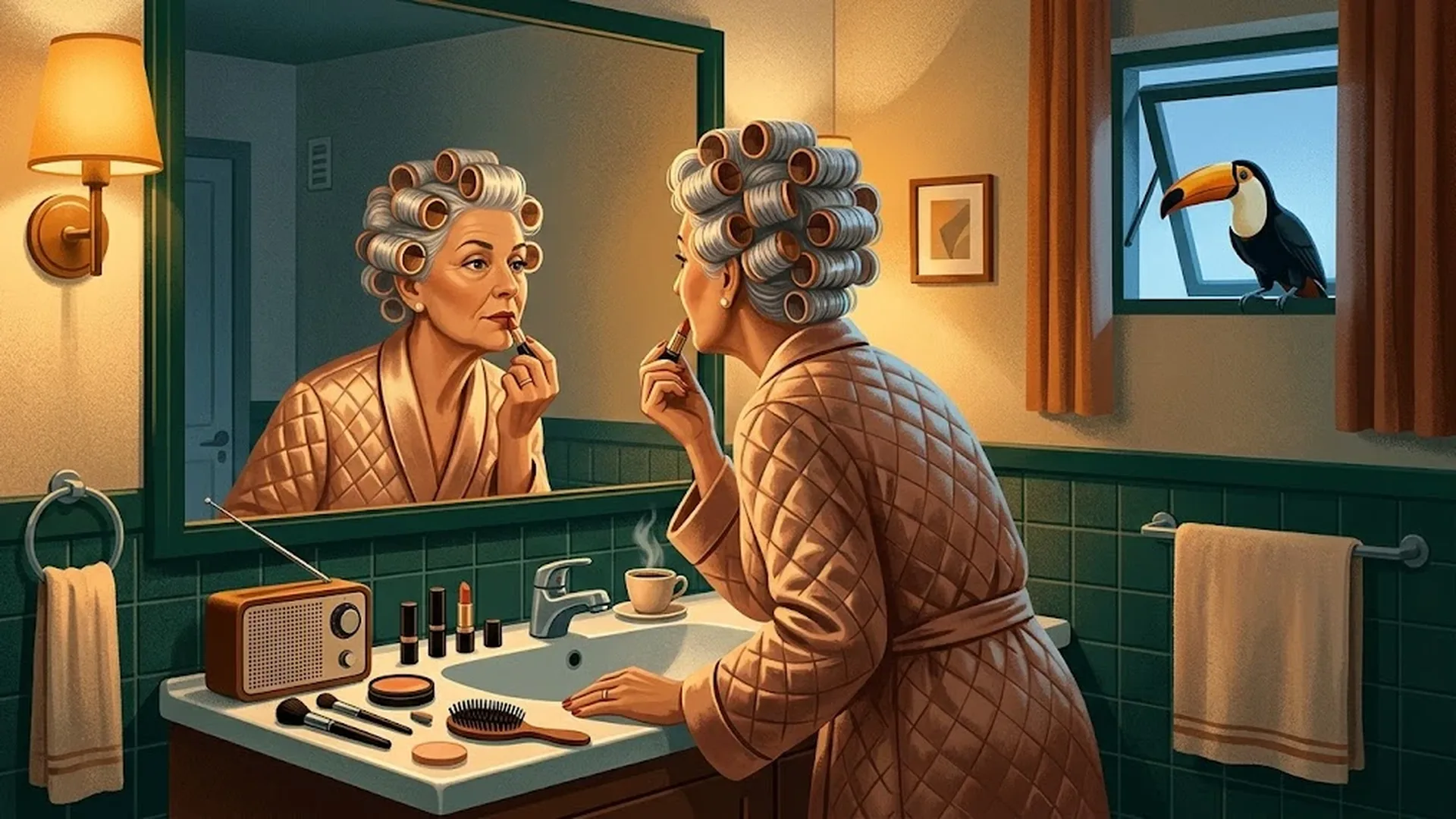
Doña Pili: «Primero, me ducho: 40 minutos, porque el agua caliente es salud. Después me maquillo y me peino. ¿Y mirarme en el espejo? Todo el día, mijo.»
¿Correcta o no? Si no, corrígela en voz alta. Después toca para comprobar.Correct or not? If not, fix it out loud. Then tap to check.
Todos están ocupados. Completa con estar + -ando / -iendo y el pronombre (antes o pegado). Dilo y toca para comprobar.Everybody is busy. Complete with estar + -ando / -iendo and the pronoun (before, or glued on). Say it, then tap to check.
Doña Pili cuenta su mañana, pero las tarjetas están desordenadas. Tócalas en orden, de la primera a la última: mira la hora. Después cuéntala: «Primero se despierta, después…».Doña Pili tells you about her morning, but the cards are mixed up. Tap them in order, from first to last: look at the time. Then tell it: “Primero se despierta, después…”.
En orden: In order: 0 / 6
Ahora tú: cuenta tu mañana en 6 pasos.Now you: tell your morning in 6 steps.
Marta: «Me despierto a las 6:30, pero me levanto a las 6:45. Me ducho por la noche, así que solo me lavo la cara. Me visto, desayuno y me maquillo en el autobús.»
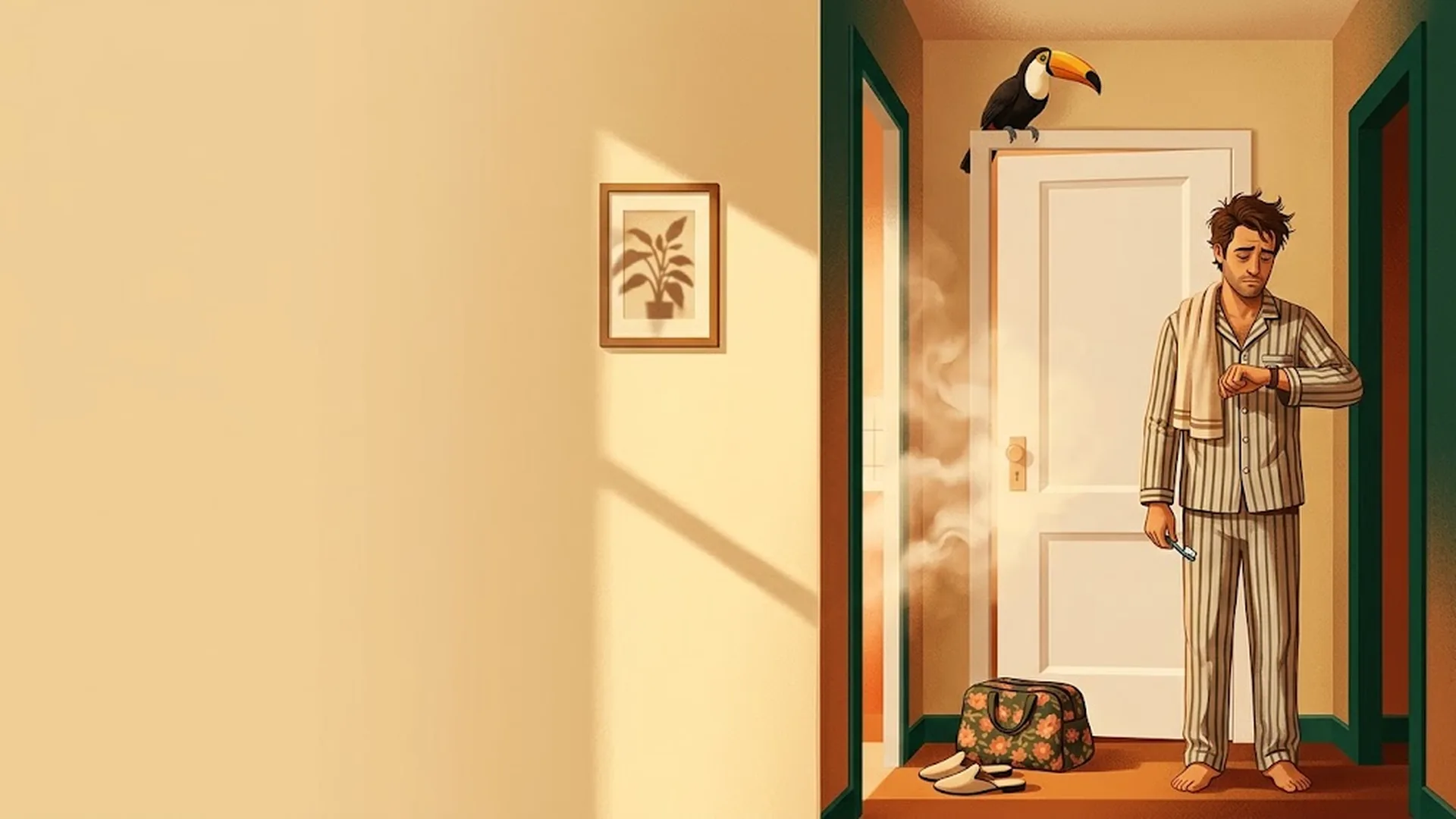
Mira otra vez la imagen del principio. Con lo que sabes ahora: ¿qué está pasando?Look again at the first picture. With what you know now: what is happening?
Por ejemplo: Doña Pili se está duchando. Julián se está desesperando (= pierde la paciencia).For example: Doña Pili se está duchando. Julián se está desesperando (is losing his patience).
Julián propone un horario. Complétalo con ir a + verbo reflexivo y defiéndelo: ¿es justo · fair? ¿Doña Pili va a aceptar?Julián suggests a schedule. Complete it with ir a + reflexive verb and defend it: is it fair? Will Doña Pili accept?
6:00 Julián se va a afeitar. 6:15 Marta va a lavarse la cara. 6:30 Doña Pili se va a peinar en su cuarto. ¿El final? Doña Pili acepta… y se compra un despertador (alarm clock) para las 4:30.
Escribe 3 frases de tu rutina con verbos reflexivos: 2 son verdad y 1 es mentira. Léelas. El profe adivina cuál es la mentira.Write 3 sentences about your routine with reflexive verbs: 2 are true and 1 is a lie. Read them. Your teacher guesses which one is the lie.
Marta: «Me levanto a las 6:45. Me maquillo en el autobús. Me ducho a las 5.» (La mentira: la última. ¡A las 5 el baño es de su mamá!)
Después, 3 preguntasThen, 3 questions
Free 20-minute level assessment
Hi, I’m Camilo. I made this lesson. In a free 20-minute call I’ll check your level and show you exactly how to start speaking. No pressure, no commitment.
Private 1-on-1 or small groups from $15/session · See plans & pricing

Sigue practicando los verbos reflexivosKeep practicing reflexive verbs Gratis y sin registrarteFree, no sign-up