A2 · ELE
Le y les · Objeto indirectoLe y les · Indirect object pronouns
A2 · LecciónA2 · Lesson
En esta claseIn this lesson
Al final podrás decir a quién le das, le traes o le cuentas algo.By the end, you will say who you give, bring or tell something to.
Con estos verbos casi siempre hay una persona que recibe algo. Léelos en voz alta.These verbs usually have a person who receives something. Read them out loud.
En muchas frases hay algo que pasa de una persona a otra: un regalo, un mensaje, un secreto. La persona que lo recibe es el objeto indirecto.In many sentences something goes from one person to another: a gift, a message, a secret. The person who receives it is the indirect object.
En español, esa persona casi siempre va con un pronombre pequeño antes del verbo: le, les, me…In Spanish, that person almost always comes with a small pronoun before the verb: le, les, me…
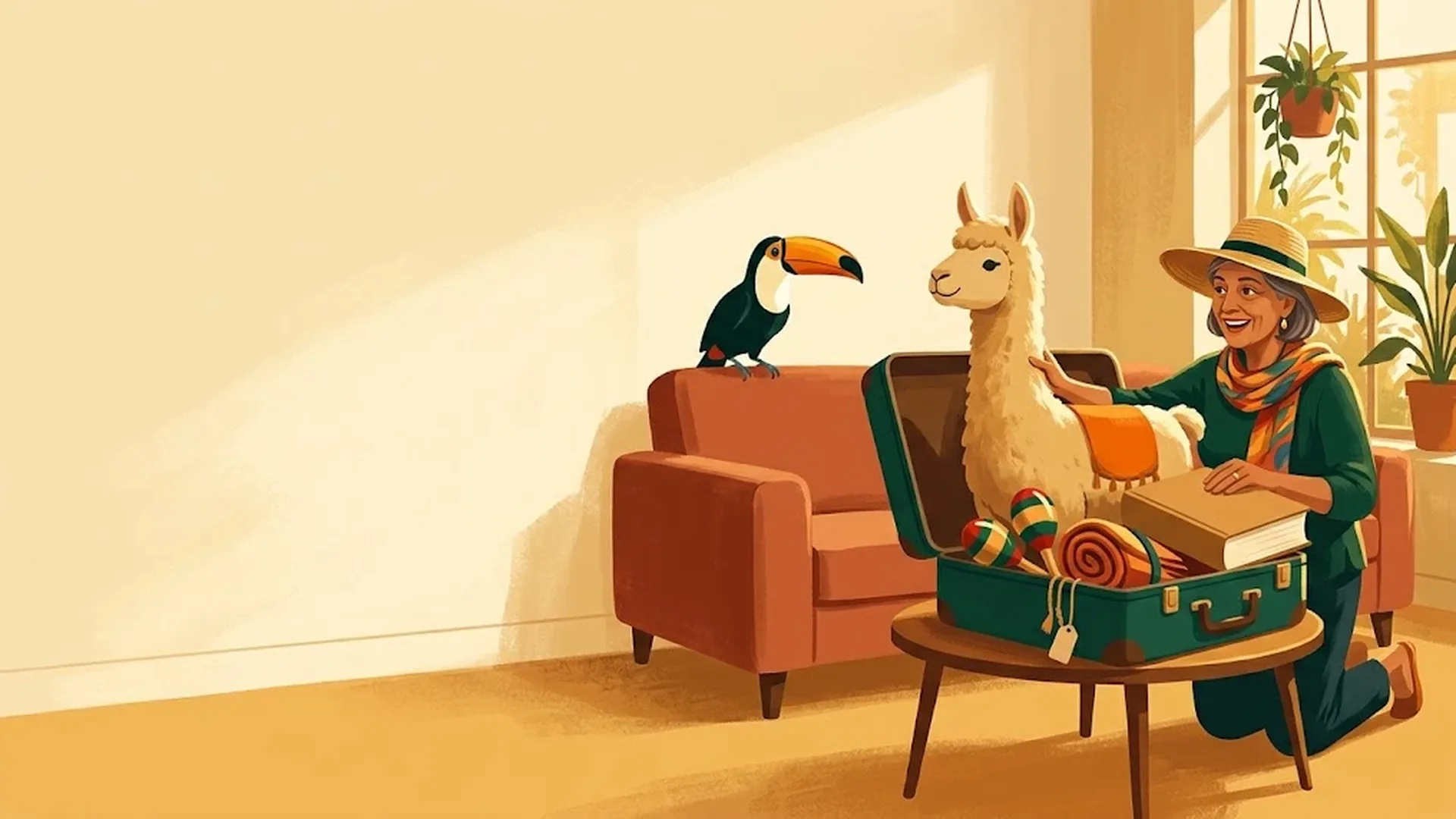
English → españolThe aunt brings Sofía a llama.→La tía le trae una llama a Sofía.
Ya conoces lo / la: cambian la cosa, el regalo. Hoy: le / les son la persona que lo recibe.You already know lo / la: they replace the gift. Today: le / les are the person who gets it.
English → españolI send it.→Lo mando.I send him a message.→Le mando un mensaje.
Cada persona tiene su pronombre. Mira quién recibe y elige.Each person has its own pronoun. Look at who receives and choose.
Son los mismos de gustar: me gusta, te gusta, le gusta, nos gusta, les gusta.They are the same as with gustar: me gusta, te gusta, le gusta, nos gusta, les gusta.
English → españolShe brings me coffee.→Me trae café.She brings us coffee.→Nos trae café.
Le doy el regalo. ¿A quién? ¿A Ana, a Pedro, a usted? Le no es claro, por eso añadimos a + la persona. El nombre aclara y le se queda, como un capitán. Así habla todo el mundo.Le doy el regalo. To whom? Ana? Pedro? You? Le is vague, so we add a + the person. The name makes it clear, and le stays, like a captain. This is how everybody speaks.
Le doy el regalo a Ana.
Les mando fotos a mis primos. · La tía le trae una llama a Sofía.
Con a mí, a ti, a nosotros, el pronombre está siempre. A mí solo da énfasis.With a mí, a ti, a nosotros, the pronoun is always there. A mí only adds emphasis.
English → españolI give her the gift.→Le doy el regalo.I give the gift to Ana.→Le doy el regalo a Ana.En español se dicen los dos: le + a Ana.
1. En inglés: I give Ana the gift. En español, la persona lleva a.1. I give Ana the gift. Spanish needs a before the person.
2. Con un verbo, el pronombre va antes del verbo. (Doyle es un apellido, no es español.)2. I give her… With one verb, the pronoun goes before the verb. (Doyle is a surname, not Spanish.)
3. Más de una persona → les. En la calle vas a oír le, pero escribe les.3. More than one person → les. On the street you will hear le, but write les.
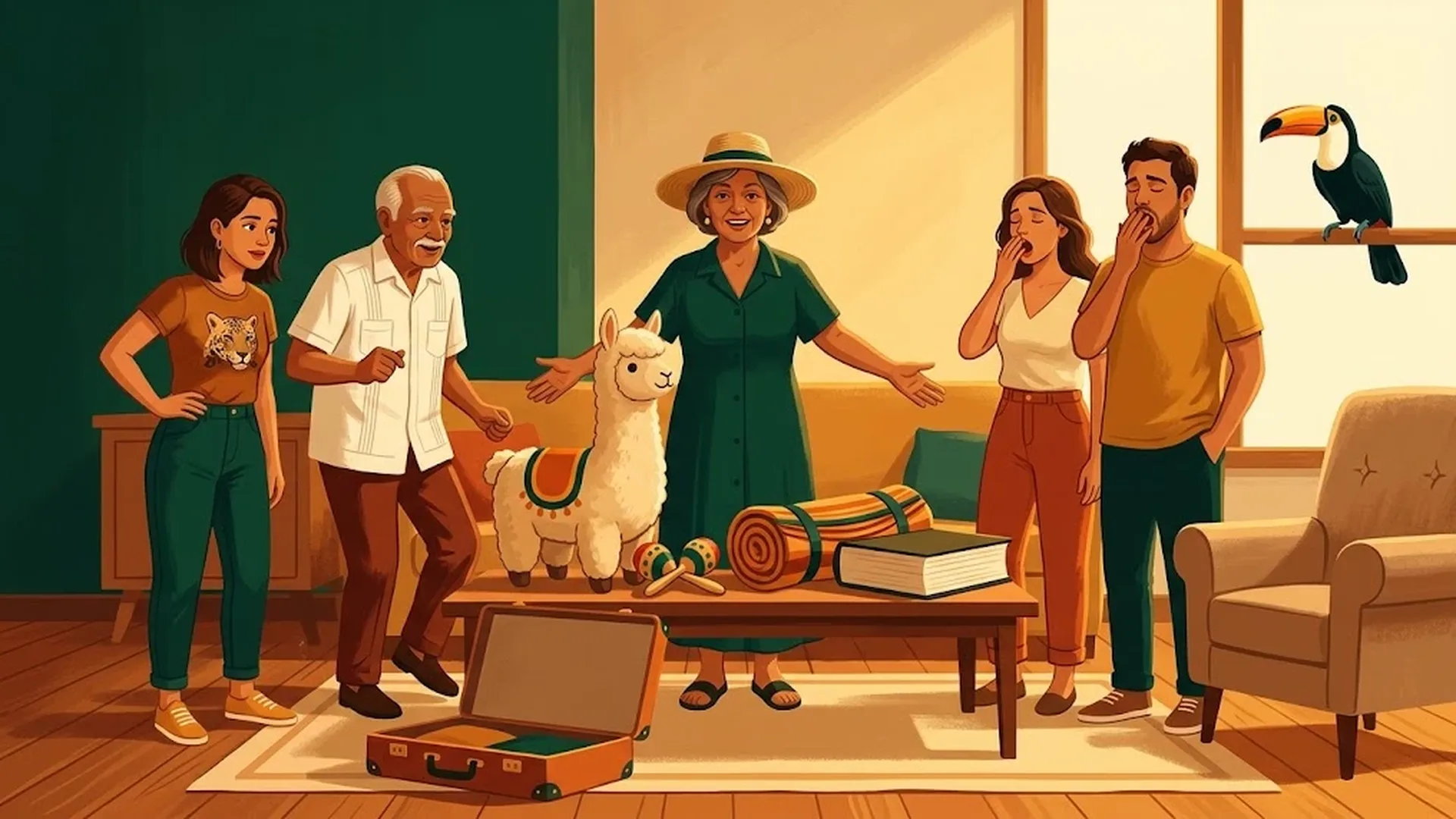
La tía Gloria te manda 4 pistas. Completa cada una con me, te, le o les, como con gustar. Dila en voz alta y toca para comprobar.Aunt Gloria sends you 4 clues. Complete each one with me, te, le or les, like with gustar. Say it out loud, then tap to check.
¿Cambias tu predicción de la maleta? Con gustar ya usabas le y les: son los mismos pronombres de dar, traer, regalar…Do you change your suitcase guess? With gustar you already used le and les: they are the same pronouns as with dar, traer, regalar…
Lee la situación. Elige el pronombre y di la frase. Luego toca la tarjeta para comprobar.Read the situation. Choose the right pronoun and say the sentence. Then tap the card to check.
Termina cada frase de 3 formas distintas, en voz alta. Ideas: llamar, mandar, contar, pedir, regalar, explicar, preguntar.Finish each sentence in 3 different ways, out loud. Ideas: llamar, mandar, contar, pedir, regalar, explicar, preguntar.
Mi familia me llama los domingos, me manda fotos y me pregunta: «¿Cuándo vienes?»
Lee cada frase en voz alta y di si está bien. Si no, corrígela. Luego toca la tarjeta para ver la respuesta.Read each sentence out loud and say if it is right. If not, fix it. Then tap the card to see the answer.
Elige 3 preguntas. Responde con frases completas y añade un detalle.Choose 3 questions. Answer with full sentences and add one detail.
«¿Quién te cuenta los mejores chismes?» «Mi vecina. Me cuenta todo… y después les cuenta mis chismes a todos.»
Cada tarjeta dice para quién es el regalo. Cámbiala por una frase completa con le, les o te + a + la persona. Dila y toca para comprobar.Each card says who the gift is for. Change it into a full sentence with le, les or te + a + the person. Say it, then tap to check.
¿Cuántas acertaste? Y a la tía Gloria… nadie le trae nada. ¿Qué le regalas tú?How many did you guess right? And Aunt Gloria… nobody brings her anything. What do you give her?
¿A quién le traes cada recuerdo y por qué? Usa el modelo. Luego responde las 2 preguntas.Who do you bring each souvenir to, and why? Use the template. Then answer the 2 questions.
A le traigo porque le encanta .
A mi jefe le traigo una hamaca porque le encanta dormir en las reuniones. A mis padres les traigo maracas porque les gusta bailar.
Free 20-minute level assessment
Hi, I’m Camilo. I made this lesson. In a free 20-minute call I’ll check your level and show you exactly how to start speaking. No pressure, no commitment.
Private 1-on-1 or small groups from $15/session · See plans & pricing

Sigue practicando los pronombresKeep practicing object pronouns Gratis y sin registrarteFree, no sign-up