Español Nivel A2 · El clima y la ropa (Página 1)Spanish Level A2 · Weather and clothes (Page 1)
Hoja de trabajo · Nivel A2 · El clima y los verbos reflexivosWeather and reflexive verbs
El estado del clima: hace frío, me pongo el abrigoWeather in Spanish: it’s cold, I put on my coat
Hace, está y hay para hablar del tiempo, y ponerse, quitarse, abrigarse y mojarse para la ropaHace, está and hay to talk about the weather, and ponerse, quitarse, abrigarse and mojarse for clothes
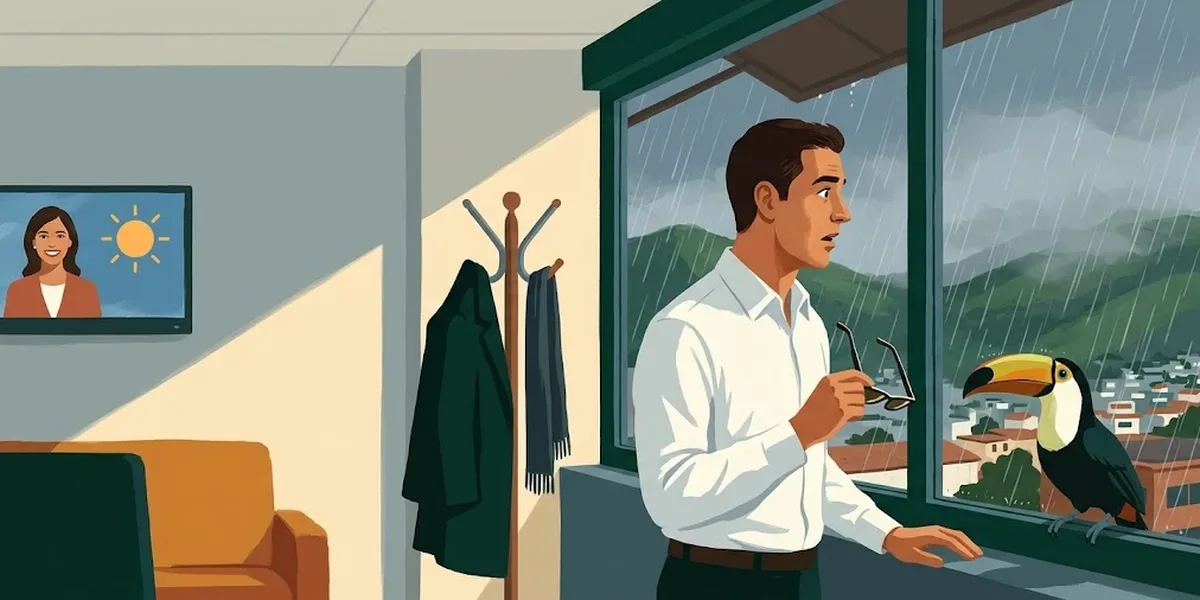
Germán vive en Bogotá, la ciudad con «cuatro estaciones en un día». Hoy, a las 7 de la noche, conoce a los papás de su novia, Valentina, en un restaurante elegante. Su hermana Paola presenta el pronóstico del tiempo en la tele. Paola nunca acierta… pero Germán siempre le cree, porque es su hermana. ¿Cómo va a llegar Germán a la cena?Germán lives in Bogotá, the city with “four seasons in one day”. Today, at 7 p.m., he meets his girlfriend Valentina’s parents at a fancy restaurant. His sister Paola presents the weather forecast on TV. Paola is never right… but Germán always believes her, because she is his sister. How is Germán going to arrive at dinner?
Temas:Topics:Hace, está, hayMe pongo el abrigoTengo fríoRepaso: superlativos
Nombre del estudiante:Student Name:
Fecha:Date:
Vocabulario clave: léelo antes de empezarKey vocabulary: read it before you start
El tiempoThe weather
El cieloThe sky
La ropaClothes
VerbosVerbs
el tiempo· weather
el sol· sun
el abrigo· coat
ponerse· to put on
el pronóstico· forecast
la niebla· fog
la bufanda· scarf
quitarse· to take off
los grados· degrees
la tormenta· storm
el paraguas· umbrella
abrigarse· to wrap up warm
el viento· wind
el granizo· hail
las gafas de sol· sunglasses
mojarse· to get wet
la lluvia · llover· rain · to rain
nublado · despejado· cloudy · clear
la chaqueta· jacket
acertar· to get it right
fresco· cool
nevar· to snow
el perchero· coat rack
seco · mojado· dry · wet
Clave 1
¿Qué es? El clima no «es»What is it? The weather doesn’t “be”
En inglés el clima va con it’s. En español no usamos es: el clima hace, está o hay. Con estos tres verbos describes el tiempo de hoy y de tu ciudad.In English, weather goes with it’s. In Spanish we do not use es: the weather hace (makes), está (is, as a state) or hay (there is). With these three verbs you describe today’s weather and your city’s weather.
Hace frío en Bogotá. · Está nublado. · Hay niebla en la carretera.
It’s cold. → Hace frío. (no «Es frío»)(not “Es frío”) · It’s cloudy. → Está nublado. · It’s foggy. → Hay niebla.
El estado del clima
Español Nivel A2 · Las claves del clima y la ropa (Página 2)Spanish Level A2 · The keys to weather and clothes (Page 2)
Primero, la explicaciónFirst, the explanation
Hace, está, hay… y me pongo el abrigoHace, está, hay… and I put on my coat
Clave 2
La forma: tres verbos, tres tipos de palabraThe form: three verbs, three kinds of word
HACE+ sustantivo+ nounhace frío · hace calor hace sol · hace viento hace fresco hace buen / mal tiempo hace 20 grados
ESTÁ+ adjetivo o gerundio+ adjective or gerundestá nublado está despejado está lloviendo está nevando
HAY+ sustantivo (algo que ves)+ noun (something you see)hay niebla hay tormenta hay granizo hay nubes
Ojo:llueve y está lloviendo son correctas las dos. Llueve mucho en abril (siempre) · Está lloviendo (ahora mismo).Watch out:llueve and está lloviendo are both correct. Llueve mucho en abril (it always rains a lot in April) · Está lloviendo (it’s raining right now).
Clave 3
La fórmula y los errores típicosThe formula and typical mistakes
✗
✓
¿Por qué?Why?
Es frío.
Hace frío.
El clima no va con ser.Weather doesn’t go with ser.
Está calor.
Hace calor.
Calor es un sustantivo: va con hace.Calor is a noun: it goes with hace.
Hay nublado.
Está nublado.
Nublado es un adjetivo: va con está.Nublado is an adjective: it goes with está.
Hago frío hoy.
Hace frío hoy.
Con el clima siempre hace, nunca hago, haces.With weather it’s always hace, never hago, haces.
Estoy frío.
Tengo frío.
La trampa: la persona tiene frío; el clima hace frío.The trap: a person has cold (tiene); the weather makes cold (hace).
I’m cold. → Tengo frío. · It’s cold. → Hace frío. · I’m hot and it’s hot. → Tengo calor y hace calor.
Clave 4
Los usos: el clima decide la ropa (verbos reflexivos)The uses: the weather decides your clothes (reflexive verbs)
Cuando cambia el clima, cambias de ropa. Estos verbos son reflexivos: la acción vuelve a ti (me, te, se…).When the weather changes, you change clothes. These verbs are reflexive: the action comes back to you (me, te, se…).
El climaThe weather
La ropaThe clothes
Hace frío.
Me pongo el abrigo. · Me abrigo.
Hace calor.
Me quito la chaqueta.
Está lloviendo y no tengo paraguas.
Me mojo.
Ponerse: (yo) me pongo · (tú) te pones · (él, ella) se pone · (nosotros) nos ponemos · (ellos, ustedes) se ponen. Quitarse, abrigarse y mojarse son regulares: me quito, te abrigas, se moja.Ponerse: (I) me pongo · (you) te pones · (he, she) se pone · (we) nos ponemos · (they, you all) se ponen. Quitarse, abrigarse and mojarse are regular: me quito, te abrigas, se moja.
I put on my coat. → Me pongo el abrigo. (con la ropa usamos el, la, los, las, no mi: el me ya dice de quién es)(with clothes we use el, la, los, las, not mi: the me already says whose it is)
El estado del clima
Español Nivel A2 · El pronóstico de Paola (Página 3)Spanish Level A2 · Paola’s forecast (Page 3)
7:00 a. m. · Empieza el casoThe case begins
«Hoy hace sol todo el día»“Today it’s sunny all day”
1El pronóstico de Paola: elige la palabra correctaPaola’s forecast: choose the correct word
Germán desayuna y mira a su hermana en la tele. Marca la palabra correcta en cada frase (claves 2, 3 y 4).Germán has breakfast and watches his sister on TV. Tick the correct word in each sentence (keys 2, 3 and 4).
Bogotá al día · el pronóstico con Paolathe forecast with Paola«¡Buenos días, Bogotá! Hoy es un día perfecto para estar en la calle.»“Good morning, Bogotá! Today is a perfect day to be outside.”
1. Hoy ___ sol todo el día. (Today it’s sunny all day.)
4. No ___ niebla ni tormenta. (There is no fog or storm.)
5. Por la noche ___ un poco de viento. (At night it’s a little windy.)
6. ¡No necesitan el paraguas! Hoy ustedes no van a ___ frío. (You don’t need the umbrella! Today you are not going to be cold.)
7.Germán le cree a Paola.Germán believes Paola. Germán ___ las gafas de sol y deja el paraguas en casa. (Germán … the sunglasses and leaves the umbrella at home.)
Con el profe (1 minuto):With the teacher (1 minute):¿Tú le crees al pronóstico? ¿Dónde lo miras: en la tele, en una app…?Do you trust the forecast? Where do you check it: on TV, in an app…?
2Pronóstico contra realidad: transforma la frase de PaolaForecast vs. reality: transform Paola’s sentence
Germán está en la oficina. Cada dos horas mira por la ventana. Escribe el tiempo real con hace, está o hay. Si Paola acierta, escribe «¡Paola acierta!» y la frase.Germán is at the office. Every two hours he looks out the window. Write the real weather with hace, está or hay. If Paola is right, write “¡Paola acierta!” and the sentence.
🌫️9:00 · 9 °C
Paola: «Hace sol.»(It’s sunny.) Ejemplo:Example:No hace sol: hay niebla y hace frío.
☁️ 🌬️11:00 · 12 °C
Paola: «Está despejado.»(The sky is clear.)
☀️13:00 · 21 °C
Paola: «Hace sol y hace calor.»(It’s sunny and hot.)
⛈️15:00 · 14 °C
Paola: «No hay tormenta.»(There is no storm.)
🧊 🌨️17:00 · 8 °C
Paola: «Hace buen tiempo.»(The weather is nice.)
El estado del clima
Español Nivel A2 · El perchero de la oficina (Página 4)Spanish Level A2 · The office coat rack (Page 4)
9:00 a 18:00 · El día de GermánGermán’s day
¿Qué se pone Germán? ¿Qué se quita?What does Germán put on? What does he take off?
3El perchero de la oficina: elige la mejor decisiónThe office coat rack: choose the best decision
En la oficina hay un perchero con un abrigo, una bufanda y el paraguas de un compañero. Mira el tiempo real de cada hora (ejercicio 2) y marca la mejor decisión, bien escrita. Después completa «porque…». Cada acierto es 1 punto de dignidad para Germán: los vas a necesitar en la página 5.At the office there is a coat rack with a coat, a scarf and a coworker’s umbrella. Look at the real weather for each hour (exercise 2) and tick the best decision, correctly written. Then complete “because…”. Each right answer is 1 dignity point for Germán: you will need them on page 5.
9:00 🌫️ 9 °C
…porque
11:00 ☁️ 🌬️ 12 °C
…porque
13:00 ☀️ 21 °C
…porque
15:00 ⛈️ 14 °C
…porque
17:00 🧊 🌨️ 8 °C
…porque
Mis puntos de dignidad (mira la clave):My dignity points (check the key): / 5
Con el profe (2 minutos):With the teacher (2 minutes):¿Qué te pones tú cuando hace frío en tu ciudad? ¿Y qué te quitas primero cuando hace calor?What do you put on when it’s cold in your city? And what do you take off first when it’s hot?
46:00 p. m.: la pantalla de Paola. Describe las tres ciudades6:00 p.m.: Paola’s screen. Describe the three cities
En el noticiero de la tarde, Paola muestra tres ciudades. Describe cada una al profe: ¿qué tiempo hace?, ¿qué ropa se pone o se quita la gente? Después escribe una frase por ciudad.On the evening news, Paola shows three cities. Describe each one to the teacher: what’s the weather like? What clothes do people put on or take off? Then write one sentence per city.
Clic para ampliarClick to enlarge
Ciudad 1 (izquierda)City 1 (left)
Ciudad 2 (centro)City 2 (center)
Ciudad 3 (derecha)City 3 (right)
El estado del clima
Español Nivel A2 · Las 7 de la noche (Página 5)Spanish Level A2 · 7 p.m. (Page 5)
6:30 p. m. · Antes de la cenaBefore dinner
El día más loco del añoThe craziest day of the year
Germán está en el taxi y mira la app del clima de Valentina. Recuerda: el / la + sustantivo + más + adjetivo + de (the coldest month of the year → el mes más frío del año). Adjetivos útiles: frío · caluroso (hot) · lluvioso (rainy).Germán is in the taxi looking at Valentina’s weather app. Remember: el / la + noun + más + adjective + de (the coldest month of the year → el mes más frío del año). Useful adjectives: frío (cold) · caluroso (hot) · lluvioso (rainy).
11 °C☀️ 7:00
9 °C🌫️ 9:00
12 °C☁️ 11:00
21 °C☀️ 13:00
14 °C⛈️ 15:00
8 °C🧊 17:00
7 °C🌧️ 19:00
r1.Las 19:00 son el momento19:00 is the … moment of the day.del día.
r2.Las 13:00 son el momento13:00 is the … moment of the day.del día.
r3.Para mí, el momento más bonito del día esFor me, the nicest moment of the day is … because …porque
7:00 p. m.: el final del caso. Lee el final de tus puntos7:00 p.m.: the end of the case. Read the ending for your points
Son las 7. Está lloviendo y hace 7 grados. Germán llega al restaurante. ¿Cómo llega? Mira tus puntos de dignidad (ejercicio 3).It’s 7 o’clock. It’s raining and it’s 7 degrees. Germán arrives at the restaurant. How does he arrive? Check your dignity points (exercise 3).
5 puntospoints:Germán llega seco y elegante, con la bufanda. El papá de Valentina le pregunta qué app del clima usa.Germán arrives dry and elegant, with his scarf. Valentina’s dad asks him what weather app he uses.
3 o 4 puntospoints:Germán llega con los zapatos mojados y se los quita debajo de la mesa. Nadie dice nada… pero el perro del restaurante sí lo mira.Germán arrives with wet shoes and takes them off under the table. Nobody says anything… but the restaurant’s dog does look at him.
0 a 2 puntospoints:Germán llega mojado y con gafas de sol. La mamá de Valentina le presta una toalla. En la tele del restaurante, Paola sonríe: «¡Mañana hace sol todo el día!»Germán arrives soaking wet and wearing sunglasses. Valentina’s mom lends him a towel. On the restaurant TV, Paola smiles: “Tomorrow it’s sunny all day!”
6La peor cita según el clima: ordena y defiende tu ordenThe worst date because of the weather: rank and defend your order
Ordena las citas de la peor (1) a la menos mala (5). Explica tu número 1 al profe. El profe defiende otro orden: ¡convéncelo! Después escribe tu frase.Rank the dates from the worst (1) to the least bad (5). Explain your number 1 to the teacher. The teacher defends a different order: convince them! Then write your sentence.
a.Un picnic en el parque… y empieza una tormenta.A picnic in the park… and a storm starts.
b.Una cena elegante: hace 30 grados y no te puedes quitar el abrigo (debajo tienes una camiseta vieja).A fancy dinner: it’s 30 degrees and you can’t take off your coat (under it you have an old T-shirt).
c.Hay tanta niebla que no encuentras el restaurante.There is so much fog that you can’t find the restaurant.
d.Hace mucho frío y tu cita se pone tu chaqueta… toda la noche.It’s very cold and your date puts on your jacket… all night.
e.Está nevando y llevas sandalias.It’s snowing and you’re wearing sandals.
La peor es la cita ___ porque…The worst is date ___ because…
El estado del clima
Español Nivel A2 · Tu pronóstico (Página 6)Spanish Level A2 · Your forecast (Page 6)
Mañana · Ahora tú das el pronósticoTomorrow · Now you give the forecast
Tu pronóstico para GermánYour forecast for Germán
Mañana Germán y Valentina visitan tu ciudad. Germán ya no le cree a Paola: ahora te cree a ti. Escribe el pronóstico con esta plantilla y después léelo en voz alta al profe.Tomorrow Germán and Valentina visit your city. Germán doesn’t believe Paola anymore: now he believes you. Write the forecast with this template and then read it out loud to the teacher.
PlantillaTemplate Mañana en ___ va a hacer ___. Por la mañana está ___ y hay ___. Por la tarde ___. Germán tiene que ponerse ___ y quitarse ___. El momento más ___ del día es ___.Tomorrow in ___ it’s going to be ___. In the morning it’s ___ and there is ___. In the afternoon ___. Germán has to put on ___ and take off ___. The most ___ moment of the day is ___.
Revisa tu pronóstico y ya puedo…Check your forecast · Now I can…
usar hace + sustantivo, está + adjetivo o gerundio y hay + sustantivo.use hace + noun, está + adjective or gerund and hay + noun.
no decir «Es frío» ni «Estoy frío»: hace frío, tengo frío.not say “Es frío” or “Estoy frío”: hace frío, tengo frío.
decir qué ropa me pongo o me quito: me pongo el abrigo (no «mi abrigo»).say what clothes I put on or take off: me pongo el abrigo (not “mi abrigo”).
usar un superlativo: el momento más frío del día.use a superlative: el momento más frío del día.
Mi pronóstico para mañanaMy forecast for tomorrowObjetivo: hace, está y hay · 2 verbos de ropa · 1 superlativoTarget: hace, está and hay · 2 clothing verbs · 1 superlative
🔑 Respuestas y Autocorrección (Haz clic para revisar)Answer Key & Self-Check (Click to expand)
Ejercicio 1: 1. hace · 2. está · 3. hace · 4. hay · 5. hace · 6. tener (la persona tiene frío) · 7. se pone.
Ejercicio 2 (modelo): 11:00: No está despejado: está nublado y hace viento. · 13:00: ¡Paola acierta! Hace sol y hace calor. · 15:00: Sí hay tormenta: está lloviendo mucho. · 17:00: No hace buen tiempo: hace mal tiempo, hay granizo y hace frío.
Ejercicio 3 (1 punto por cada una): 9:00 b (c no tiene se) · 11:00 a · 13:00 b (c dice mi abrigo) · 15:00 c · 17:00 a (c: la persona tiene frío, no está frío). «Porque» (modelo): porque hay niebla y hace frío · porque está nublado y hace viento · porque hace sol y hace calor · porque hay tormenta · porque hay granizo y hace mucho frío.
Ejercicio 4 (modelo): Ciudad 1: Hace sol y hace calor; la gente se quita la chaqueta y toma algo en la terraza. · Ciudad 2: Está lloviendo; la gente se pone el abrigo y abre el paraguas. · Ciudad 3: Hace viento y está nublado; hay nieve en la montaña y la gente se abriga.
Repaso de superlativos: r1. más frío · r2. más caluroso (o: menos frío) · r3. respuesta libre, por ejemplo: las 13:00, porque hace sol.
Ejercicio 6 (modelo): La peor es la cita b porque hace 30 grados, tengo mucho calor y no me puedo quitar el abrigo.
Pronóstico (modelo): Mañana en Medellín va a hacer calor. Por la mañana está nublado y hay un poco de niebla. Por la tarde hace sol y hace 27 grados. Germán tiene que ponerse las gafas de sol y quitarse el abrigo. El momento más caluroso del día es a las 2 de la tarde.
✨ Recursos Exclusivos Tucaneo
🔓 Desbloquea los ejercicios interactivos y recursos prácticos🔓 Unlock interactive exercises and practice resources
Ingresa tu correo para acceder al material completo de esta lección y recibir novedades de nuestros grupos reducidos de conversación.Enter your email to access the full lesson material and get priority updates on our Small Conversation Groups.
🔒Sin spam. Cancela cuando quieras.No spam. Unsubscribe anytime.
¿Qué tiempo hace en tu ciudad? Cuéntalo en español.What’s the weather like in your city? Tell it in Spanish.
Agenda tu clase personalizada con Camilo y habla del clima, de tu ropa y de tus planes.Book your 1-on-1 class with Camilo and talk about the weather, your clothes and your plans.
aprendecontucaneo@gmail.com
tucaneo.com
Guarda tu progreso
Tus respuestas no se guardan en el servidor.
Para no perder tu trabajo, presiona "Guardar como PDF" abajo (o Ctrl/Cmd + P).
Elige "Guardar como PDF" como destino.
Envía el PDF a tu profesor: aprendecontucaneo@gmail.com
Imagen ampliada · Haz clic afuera o presiona ESC para cerrarExpanded image · Click outside or press ESC to close
Sigue practicando el clima y la ropaKeep practicing weather and clothes
Tres materiales del mismo módulo, gratis y sin registrarte.Three more materials from this module — free, no sign-up.
Finished this worksheet? Let’s practice speaking it out loud!
Hi, I’m Camilo — I made this worksheet. In a free 20-minute call I’ll check your level and show you exactly how to start speaking. No pressure, no commitment.
¿Eres abogado o profesional de negocios? Conoce nuestro programa especializado: Español Jurídico B2B.Are you an attorney or business professional? Explore our specialized B2B Legal Spanish Program: Legal Spanish for Lawyers.


 Me levanto, te duchas: los verbos reflexivosPresentación
 La vida secreta de los superhéroesPresentación
 Los verbos reflexivos: cómo y cuándoHoja de trabajo