A1 Spanish Practice Worksheet
Los Números en Español (0 a 1.000.000)
Guía de Reglas: Fusion, Y-Bridge, Centenas y Miles
Learn to count, read prices, express quantities, and solve real-life shopping scenarios!

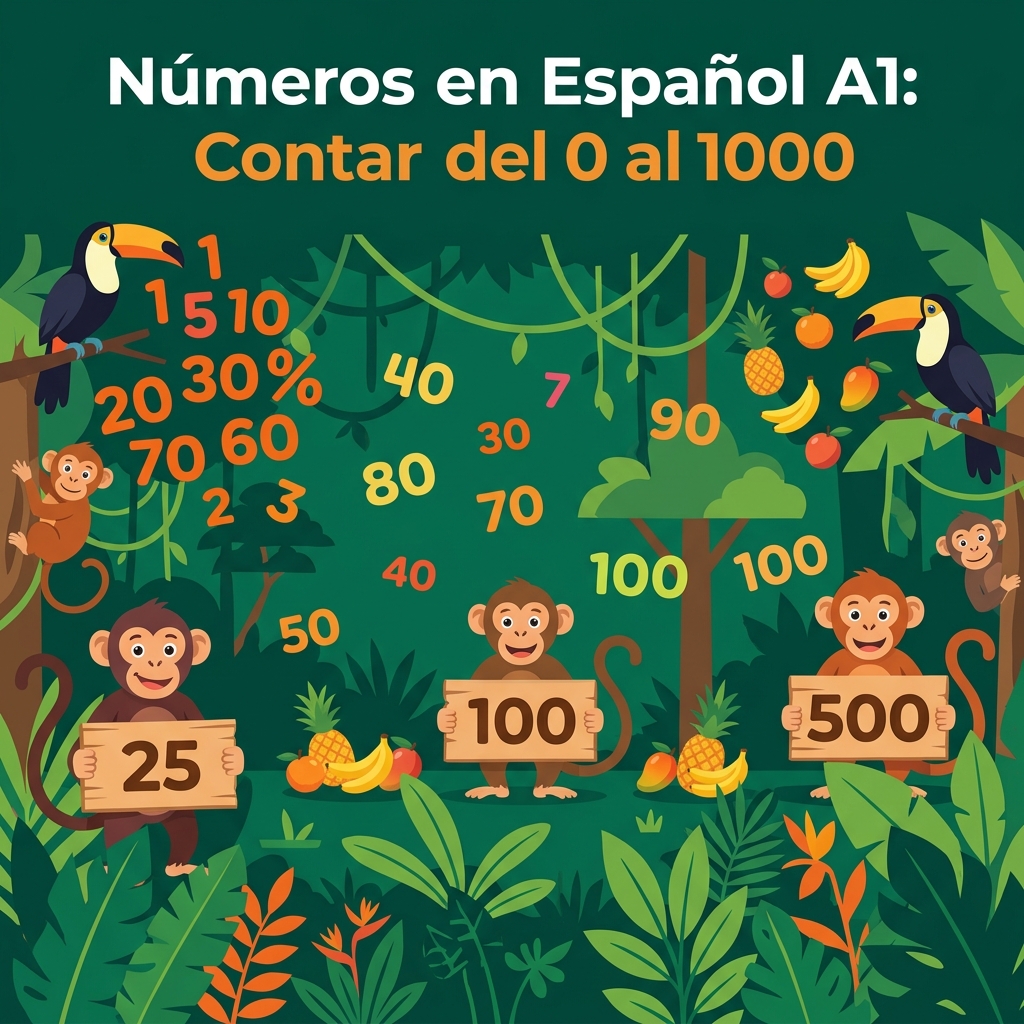
Learn to count, read prices, express quantities, and solve real-life shopping scenarios!
Group 1 — The Unique Base Numbers (0–15)
These 16 base numbers have unique names — memorize them first, as all larger numbers are built from them!
| # | Spanish |
|---|---|
| 0 | Cero |
| 1 | Uno |
| 2 | Dos |
| 3 | Tres |
| # | Spanish |
|---|---|
| 4 | Cuatro |
| 5 | Cinco |
| 6 | Seis |
| 7 | Siete |
| # | Spanish |
|---|---|
| 8 | Ocho |
| 9 | Nueve |
| 10 | Diez |
| 11 | Once |
| # | Spanish |
|---|---|
| 12 | Doce |
| 13 | Trece |
| 14 | Catorce |
| 15 | Quince |
Group 2 — The FUSION Rule (16–29)
Numbers 16 to 29 fuse into ONE single word (never three separate words!). Note the spelling shifts:
| # | 16–19 (dieci + unit) | Spelling Shift |
|---|---|---|
| 16 | dieciséis | diez + seis (z → c + i) |
| 17 | diecisiete | diez + siete |
| 18 | dieciocho | diez + ocho |
| 19 | diecinueve | diez + nueve |
| # | 20–29 (veinti + unit) | Spelling Shift |
|---|---|---|
| 20 | veinte | Base 20 |
| 21 | veintiuno | veinte + uno (e → i) |
| 22 | veintidós | veinte + dos |
| 23 | veintitrés | veinte + tres |
| 24 | veinticuatro | veinte + cuatro |
| 25 | veinticinco | veinte + cinco |
| 26 | veintiséis | veinte + seis |
| 27 | veintisiete | veinte + siete |
| 28 | veintiocho | veinte + ocho |
| 29 | veintinueve | veinte + nueve |
Group 3 — The Y-Bridge Rule (30–99)
From 30 onwards, numbers are written as three separate words connected by the conjunction "y" (NO fusion!):
| Tens (#) | Decena (Tens Name) | Example Combinations |
|---|---|---|
| 30 | Treinta | 31 treinta y uno · 34 treinta y cuatro · 39 treinta y nueve |
| 40 | Cuarenta | 42 cuarenta y dos · 45 cuarenta y cinco · 48 cuarenta y ocho |
| 50 | Cincuenta | 53 cincuenta y tres · 56 cincuenta y seis · 58 cincuenta y ocho |
| 60 | Sesenta | 61 sesenta y uno · 67 sesenta y siete · 69 sesenta y nueve |
| 70 | Setenta | 72 setenta y dos · 75 setenta y cinco · 77 setenta y siete |
| 80 | Ochenta | 83 ochenta y tres · 86 ochenta y seis · 88 ochenta y ocho |
| 90 | Noventa | 91 noventa y uno · 95 noventa y cinco · 99 noventa y nueve |
Group 4 — The Hundreds (Centenas 100–999)
Notice that 100 changes from Cien to Ciento... when followed by another number, and hundreds agree in gender with the noun!
| # | Masculine Form | Feminine Form | Notes |
|---|---|---|---|
| 100 | Cien (exact) / Ciento... | Cien / Ciento... | 100 exact = Cien |
| 200 | doscientos | doscientas | doscientos dólares |
| 300 | trescientos | trescientas | trescientas páginas |
| 400 | cuatrocientos | cuatrocientas | cuatrocientos pesos |
| 500 | quinientos | quinientas | ⚠️ Irregular root |
| 600 | seiscientos | seiscientas | seiscientas personas |
| 700 | setecientos | setecientas | ⚠️ Irregular root |
| 800 | ochocientos | ochocientas | ochocientos euros |
| 900 | novecientos | novecientas | ⚠️ Irregular root |
Group 5 — Thousands & Millions (Miles y Millones 1.000–1.000.000)
Study how large numbers, prices, and populations are formed in Spanish:
| Number (#) | Spanish Expression | Key Usage Rule |
|---|---|---|
| 1.000 | mil | Never say "un mil", just say mil! |
| 2.000 | dos mil | Mil is invariable (never "miles") |
| 10.000 | diez mil | Diez mil habitantes |
| 50.000 | cincuenta mil | Cincuenta mil pesos |
| 100.000 | cien mil | Cien mil personas |
| 500.000 | quinientos mil | Quinientos mil dólares |
| 1.000.000 | un millón (de...) | Requires "de" before nouns! |
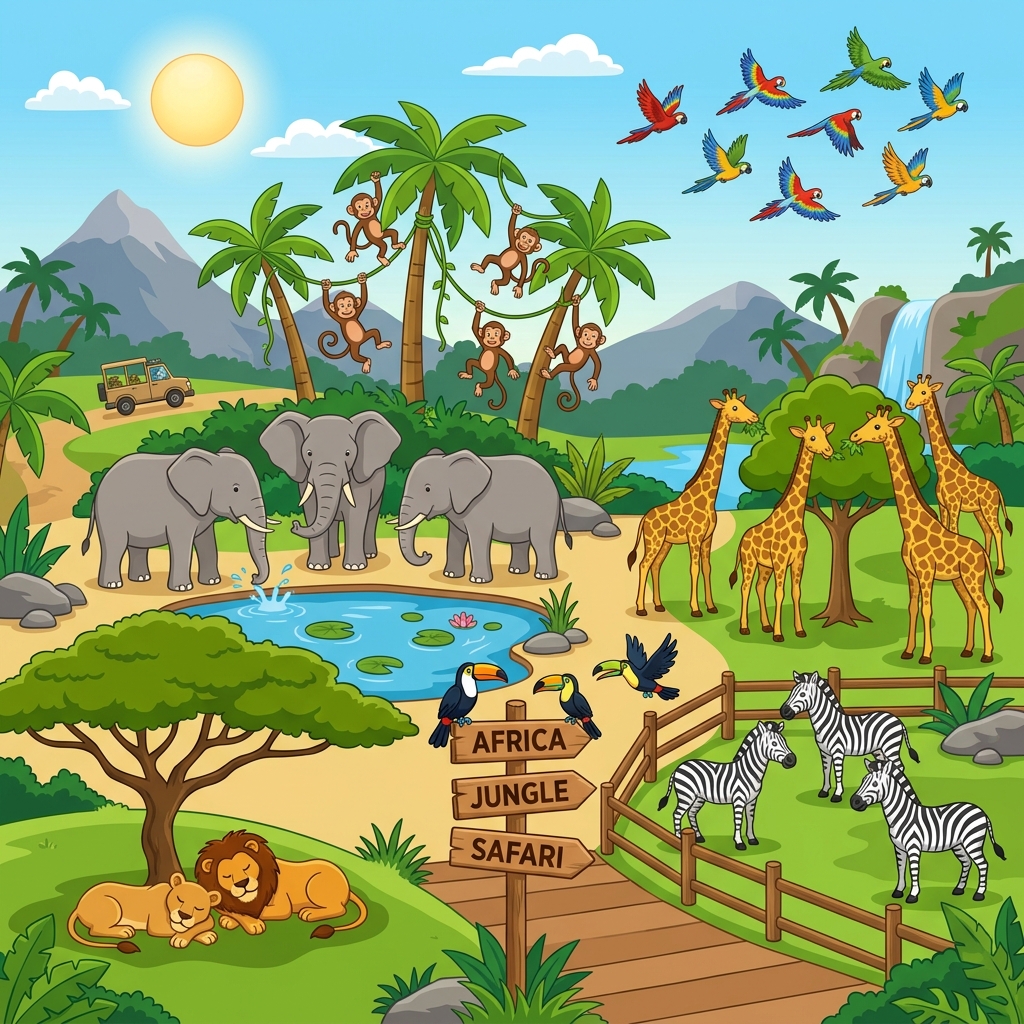
Study the tropical zoo illustration below carefully. Answer each question in a complete Spanish sentence using HAY, SER, or ESTAR and write out the numbers as words in Spanish!
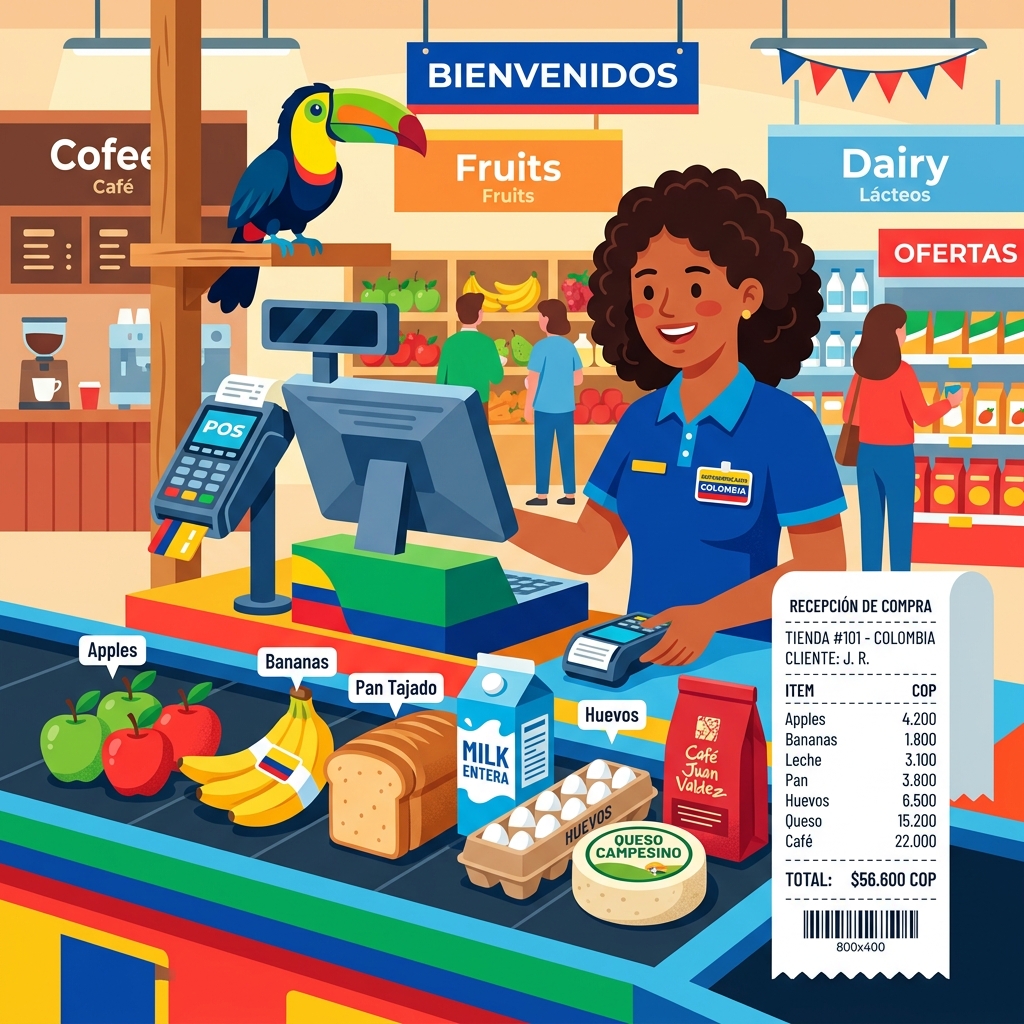
You are shopping at a Colombian supermarket. Study the checkout counter and receipt price list below, then practice asking for prices and quantities using ¿Cuánto cuesta...?, ¿Cuántos/as...?, and ¿Hay...?.
Book your 1-on-1 personalized Spanish class with Camilo at Tucaneo Academy!
aprendecontucaneo@gmail.com
tucaneo.com